Pioneering UL-certified, liquid-cooled, and battery-buffered DC fast charging infrastructure designed for extreme operational reliability.
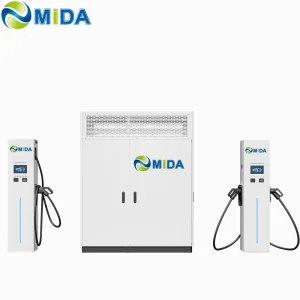
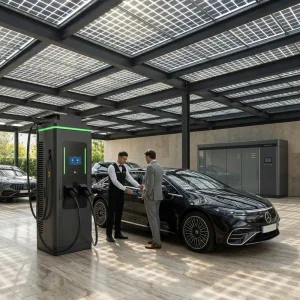
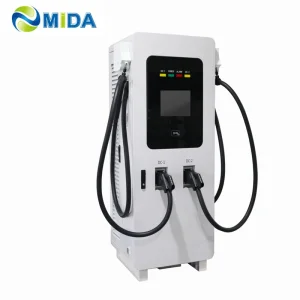
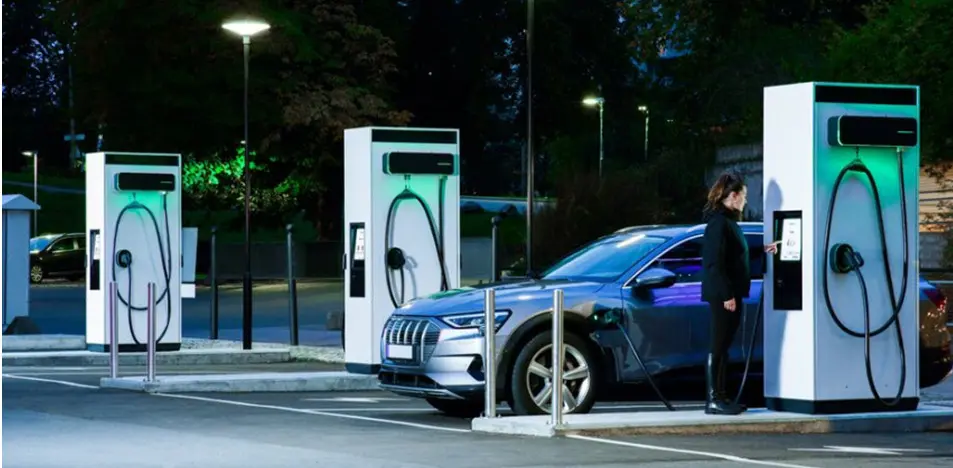
The United States is undergoing an unprecedented energy transition. Driven by federal funding mandates such as the NEVI (National Electric Vehicle Infrastructure) formula program, the demand for robust, high-performance EV charging equipment has reached critical levels. Enterprise operators, utility networks, and municipal transit agencies can no longer rely on legacy low-power systems. Today's commercial deployment profiles require systems designed for maximum continuous uptime, localized load management, and multi-protocol flexibility.
For charging systems to operate reliably within the diverse and complex US utility grid, structural intelligence is paramount. Integrating multi-standard connector systems (such as the transition from CCS1 to J3400/NACS), advanced thermal regulation, and cybersecurity-hardened communication protocols (OCPP 2.0.1) is now standard operational practice. As a premier industrial leader, we design systems that mitigate local distribution capacity limits, offering deep power engineering that guarantees operational continuity.
Our technical architecture addresses the primary failure modes of public fast-charging networks: dynamic cable strain, contactor wear, and module-level heat load management.
Engineered specifically to solve municipal, commercial, and highway logistics grid challenges.
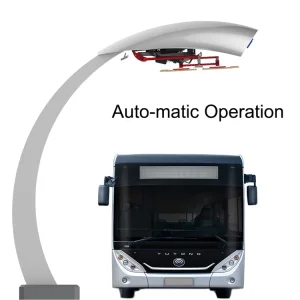
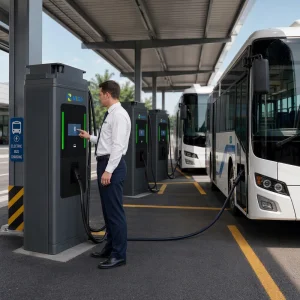
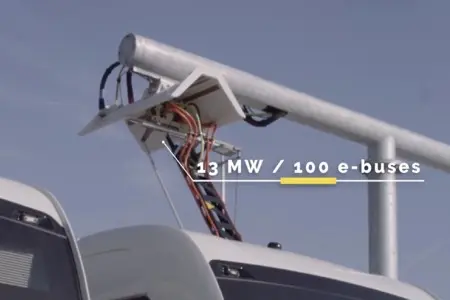
Deploying heavy-duty transit infrastructure requires high-power continuity. Our high-power split-type pantograph systems (300kW–600kW) and liquid-cooled megawatt-class charging stations allow municipal bus depots and regional logistics freight operators to fast-charge vehicles in short operational windows, reducing downtime and optimizing fleet utilization.
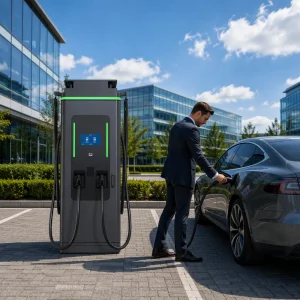
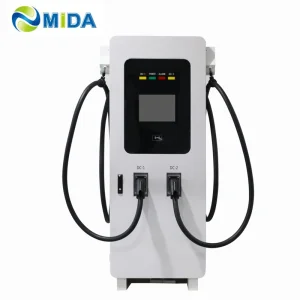
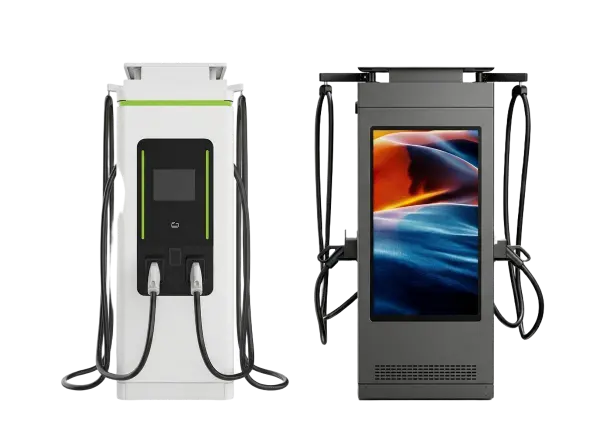
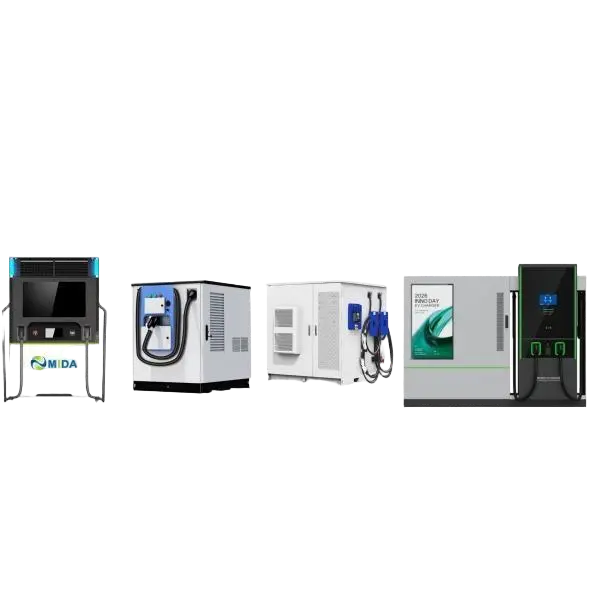
For retail hubs and urban commercial real estate, customer experience and charge rate speeds are parallel priorities. Integrated advertising display systems (43-inch and 55-inch variants) paired with 60kW to 240kW dual-dispenser DC fast chargers allow property owners to monetize charging hubs through visual digital media while providing premium charging speeds.
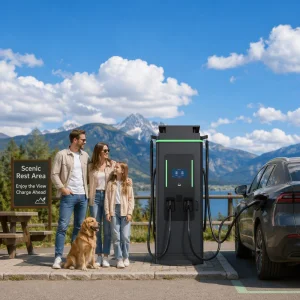
In areas where utility grid updates are delayed, our BESS (Battery Energy Storage System) integrated fast chargers (from 241kWh capacities up to multi-megawatt configurations) act as localized peak-shaving buffers. They charge at low rates off-peak and deliver up to 240kW of sustained output during customer charges without putting strain on the local grid.
How our product design aligns with upcoming changes in standards, power density requirements, and grid integration.
With North America aligning on the NACS (SAE J3400) connector standard, our hardware designs features modular cable systems. Field technicians can easily upgrade connectors without replacing internal dispenser components, protecting long-term capital investments.
By shifting power module designs to Silicon Carbide (SiC) wide-bandgap semiconductors, we have reduced switching losses by over 45% compared to legacy silicon. This allows us to achieve efficiency ratings up to 96.5% and reduce thermal dissipation requirements.
Future grid operations will rely on electric vehicles as distributed battery assets. Our V2G (Vehicle-to-Grid) power modules support bi-directional power conversion, helping fleet operators generate new revenue by providing ancillary services back to local grids.
Shanghai Mida Cable Group Ltd. operates through its wholly owned subsidiaries: Shanghai Mida EV Power Co., Ltd., Shenzhen Mida EV Power Co., Ltd., and Shanghai Mida New Energy Co., Ltd.
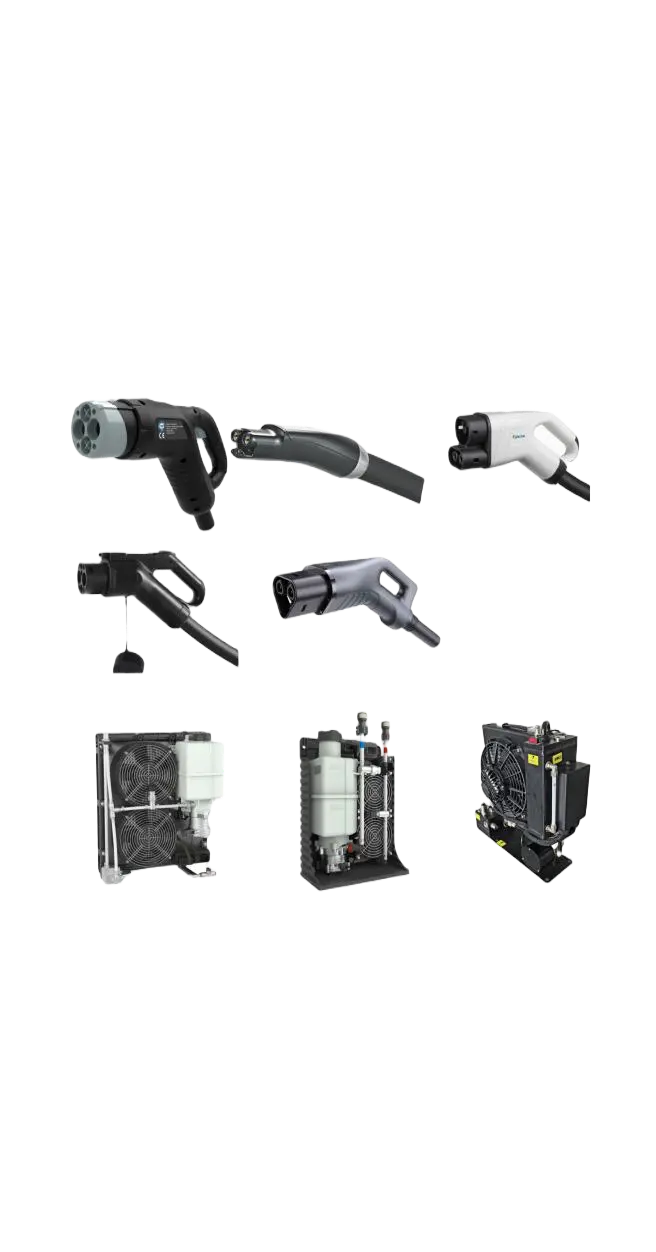
Mida Cable manufactures a comprehensive range of EV charging cables, including 16A–80A J1772 cables, 16A–63A IEC 62196-2 Type 2 cables, and DC fast charging cables: CCS1 (80A–500A), CCS2 (125A–1000A), CHAdeMO (125A–300A), GBT (200A–1000A), and NACS connectors (250A–600A).
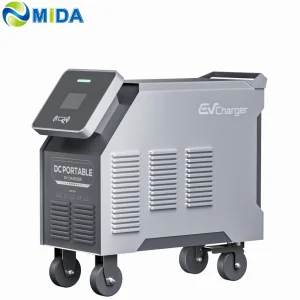
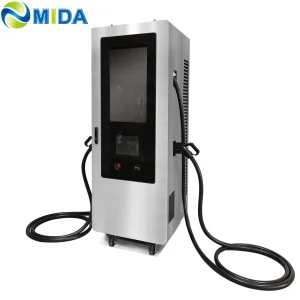
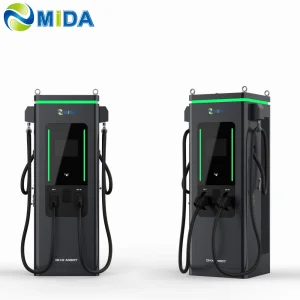
MIDA EV Power produces a full lineup of EV charging stations, such as 7kW–50kW mobile chargers, 3.6kW–7.2kW portable DC chargers, 360kW–1440kW split-type DC fast chargers, 20kW–50kW wall-mounted DC chargers, and 60kW–480kW floor-standing DC fast charging stations.
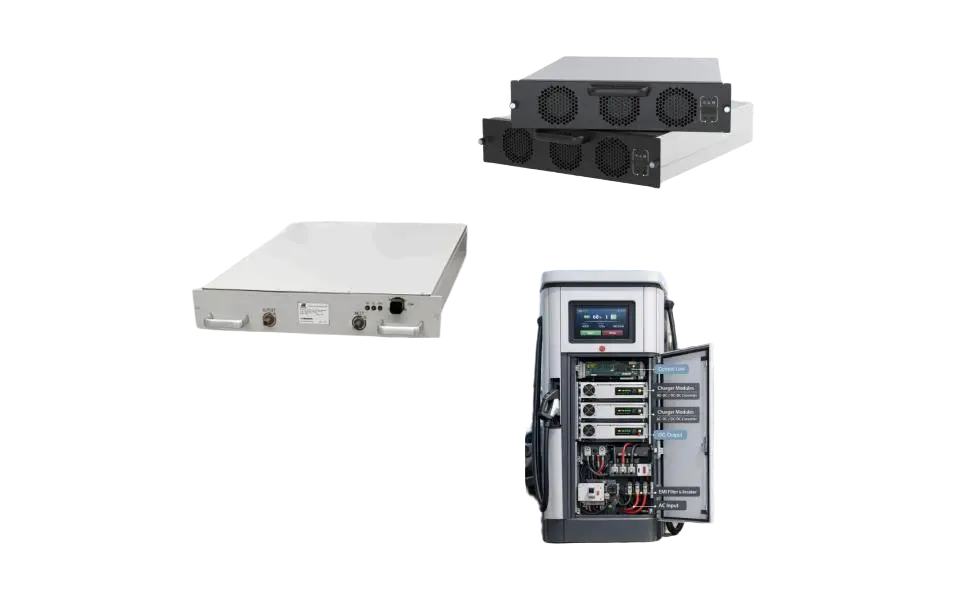
MIDA New Energy specializes in EV charger power modules, offering 20kW–60kW standard modules, 40kW–125kW liquid-cooled modules, 30kW–62.5kW bidirectional modules, and 20kW–45kW V2G charging modules.

Explore our high-performance components and hardware systems engineered for global charging installations.
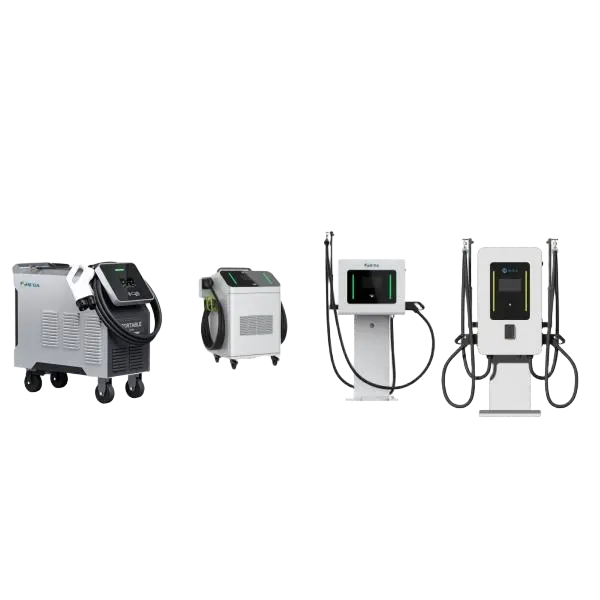
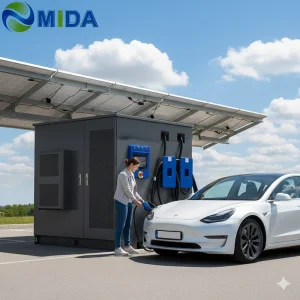
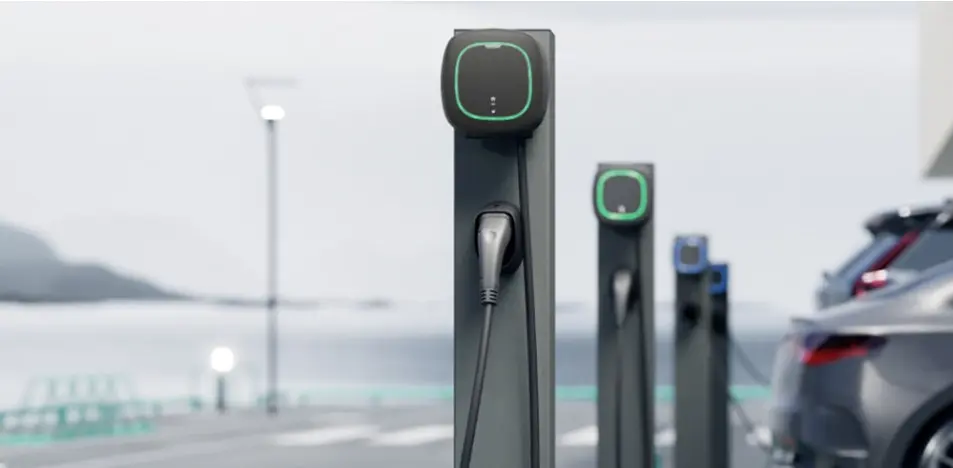
Flexible charging solutions designed for quick installations at commercial real estate sites, auto dealerships, and service centers.
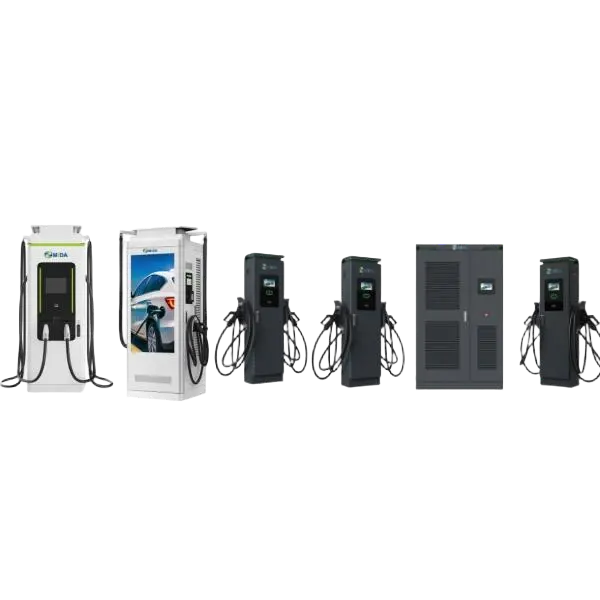
High-performance split and integrated chargers designed for public fast-charging networks and transit depots.
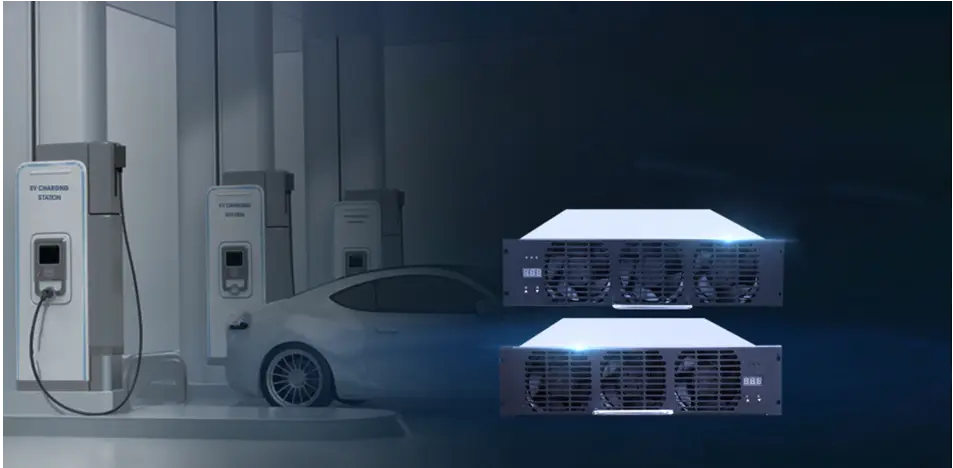
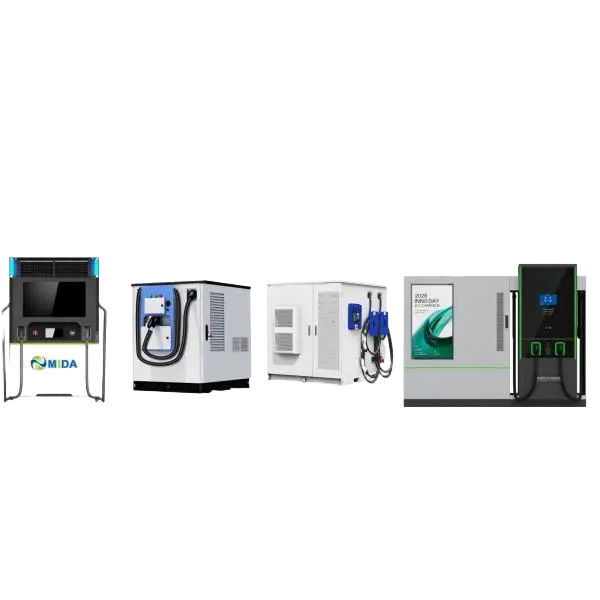
High-capacity battery systems that enable high-power charging at grid-constrained locations while optimizing peak demand costs.
Global deployment of high-power charging infrastructure requires a resilient, responsive supply chain. The MIDA Group factory network delivers manufacturing quality and cost-efficiency through deep vertical integration, from copper refining and cable extrusion to automated surface-mount technology (SMT) for control board assembly.
By managing both raw component manufacturing (including cable extrusion and liquid-cooling loop assemblies) and finished hardware assembly under one corporate umbrella, we reduce supply chain bottlenecks and maintain strict quality control.
Our factories feature automated SMT lines for power electronics, precision robotic wire termination, and climate-controlled assembly areas for power module production, ensuring high reliability and performance.
We design, prototype, and tool new connector layouts or enclosure options in weeks, compared to the industry standard of several months. This helps operators stay ahead of changing vehicle connection requirements.
Every unit undergoes load testing, isolation safety analysis, temperature cycling, and ingress protection verification prior to shipping, ensuring reliable performance in harsh local environments.
Deploying public charging infrastructure in the United States requires adherence to strict electrical safety and communication regulations. Our hardware systems are engineered from the ground up to meet these strict compliance standards, helping streamline the local zoning, inspection, and utility commissioning processes.
Our software stack supports both OCPP 1.6J and the newer OCPP 2.0.1 protocols. This allows operators to integrate with modern back-end software systems and features:
Technical insights and industry advancements from our global engineering teams.

Answers to key technical questions about grid integration, hardware standards, and deployment logistics.
Battery Energy Storage System (BESS) coupled chargers serve as a localized energy buffer. They store power from the grid during low-demand periods and discharge to support rapid charging during peak use. This reduces utility demand charges and grid-connection capacity upgrades, enabling high-speed charging even at locations with constrained local electrical infrastructure.
Our DC Fast Charger dispensers feature modular internal terminal blocks. This configuration allows field service technicians to easily swap out CCS1 liquid-cooled cables for NACS (SAE J3400) assemblies on-site. The control software is programmed to recognize either protocol automatically, minimizing downtime and saving equipment retrofit costs.
At charging currents above 200A, the copper conductors in standard air-cooled cables generate significant resistive heat. Dynamic liquid cooling cycles a specialized coolant through the cable and connector, keeping temperatures safe. This allows our 500A-rated connectors to use lighter, more flexible cables, making them easier for customers to handle.
Our chargers are designed with modular power blocks. If one power module fails, the system automatically redirects power through the remaining modules to keep the station running at a slightly reduced rate. Additionally, OCPP connectivity enables our remote support teams to monitor diagnostics and resolve many software issues before they affect users.
High-capacity power modules, robust connectors, and emergency charging systems engineered for durability.